How to Choose the Best Sunshade Glasses for Your Needs?
Choosing the right Sunshade Glasses is essential for protecting your eyes from harmful UV rays. According to a report by the Vision Council, nearly 80% of UV exposure occurs before the age of 18. Wearing high-quality sunshade glasses can significantly reduce this risk. Dr. Emily Schneider, a renowned optometrist, emphasizes, “Investing in proper eyewear is investing in your eye health.”
In addition to UV protection, comfort and style also play vital roles. Various factors, such as lens materials and frame designs, impact your overall experience. Many consumers overlook these details when selecting their sunshade glasses. A poor fit can lead to discomfort and headaches, especially during long outdoor activities. Remember, not all glasses suit everyone equally.
While many brands claim superiority, it’s crucial to assess their claims critically. Look for certifications and customer reviews before making a choice. The right pair can enhance visibility and provide comfort. Balancing style and function is key to finding the best sunshade glasses for your specific needs.
Understanding the Importance of Sunshade Glasses for Eye Protection
Sunshade glasses play a vital role in protecting our eyes from harmful UV rays. The World Health Organization notes that excessive exposure to UV radiation can lead to cataracts, macular degeneration, and other serious eye conditions. Around 20% of cataract cases are linked to UV exposure. Consequently, wearing sunshade glasses is not merely a fashion statement; it's essential for safeguarding long-term eye health.
Choosing the right sunshade glasses involves more than just style. Look for lenses that block 100% of UVA and UVB rays. A study published in the Archives of Ophthalmology highlights that sunglasses with proper UV protection can significantly reduce the risk of developing eye diseases. Polarized lenses can also minimize glare, making them ideal for outdoor activities. When outdoors, nearly 50% of UV exposure comes from indirect sunlight reflecting off surfaces like water and pavement. This underscores the need for effective eye protection.
Not all sunshade glasses provide the same level of protection. Some may claim UV blocking but have lower standards. Therefore, certification from authoritative bodies, such as the American National Standards Institute (ANSI), is critical. Investing in high-quality sunglasses means considering factors like lens color and frame fit. A poor fit may allow sunlight to enter from the sides. Selecting the right pair is not just about aesthetics; it is an investment in your vision and overall eye health.
How to Choose the Best Sunshade Glasses for Your Needs?
| Feature |
Description |
Importance |
Recommendation |
| UV Protection |
Blocking harmful UV rays to prevent eye damage. |
Critical for long-term eye health. |
Choose glasses with 100% UV protection. |
| Lens Polarization |
Reduces glare from surfaces like water and roads. |
Important for clarity and comfort during outdoor activities. |
Opt for polarized lenses if you spend a lot of time outdoors. |
| Lens Tint |
Color and darkness of the lens affect light transmission. |
Affects comfort and visibility in bright conditions. |
Choose a tint suited for your primary activities. |
| Frame Comfort |
Good fit should not pinch or slide off. |
Essential for prolonged use. |
Try before you buy to ensure comfort. |
| Scratch Resistance |
Lenses that resist scratches maintain clarity longer. |
Important for durability and longevity. |
Look for coated lenses. |
Different Types of Sunshade Glasses and Their Features
Sunshade glasses come in various types, each designed to cater to specific needs.
Polarized sunglasses are popular for reducing glare from reflective surfaces like water or roads.
They are essential for drivers and outdoor sports enthusiasts.
Photochromic lenses change tint based on light exposure.
They provide convenience, as you don’t need to switch between regular and sunglasses.
Another option is wraparound sunglasses.
These glasses offer extra protection by covering more of the side of your face.
This design minimizes harmful UV rays entering from the sides.
It’s a good choice for those who spend a lot of time outdoors.
Don’t overlook the importance of lens materials.
Polycarbonate lenses are lightweight and impact-resistant, making them ideal for active individuals.
Tips: Look for sunglasses that provide 100% UV protection.
Test the fit and comfort—if they pinch or slide, you'll rarely wear them.
Consider lens color as well; gray reduces brightness without distorting colors, while brown enhances contrast.
Always choose a style that suits your everyday activities and personal fashion.
Remember, comfort and protection go hand in hand.
Factors to Consider When Choosing Sunshade Glasses
When selecting sunshade glasses, several factors deserve attention. Firstly, UV protection is essential. The American Academy of Ophthalmology recommends lenses that block 100% of UVA and UVB rays. This helps prevent long-term damage to your eyes. Reports indicate that prolonged exposure to UV can increase the risk of cataracts and macular degeneration.
Lens color can influence comfort and vision quality. Gray lenses reduce overall brightness without distorting colors. Meanwhile, brown or amber lenses enhance contrast. According to research from the Vision Council, a significant number of consumers choose lenses based solely on style, often neglecting functional benefits. Comfort should also be a consideration. Frames that fit well and are lightweight can enhance the wearing experience, especially during extended outdoor activities.
Polarization is another critical feature for reducing glare. This is particularly beneficial for those spending time near water or driving. Studies suggest that polarized lenses can improve visibility in bright environments. Users often overlook this aspect, leading to discomfort. It is vital to weigh both aesthetics and practicality to ensure a well-rounded choice.
How to Determine the Right UV Protection Level for Your Needs
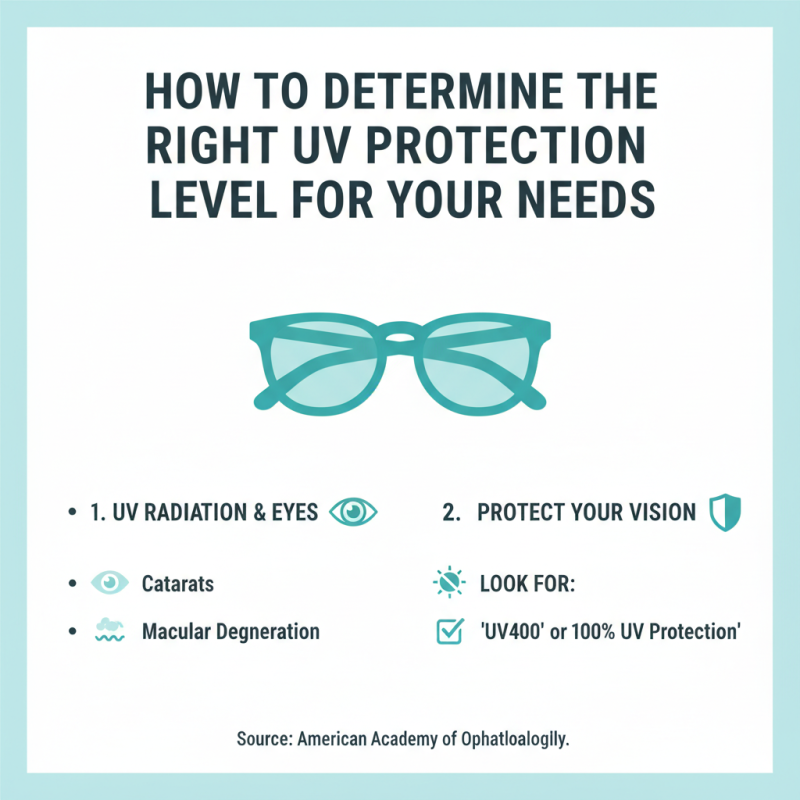
Choosing the right UV protection level for your sunshade glasses is crucial. The American Academy of Ophthalmology states that UV radiation can lead to various eye issues. These include cataracts and macular degeneration. Understanding UV ratings helps protect your vision.
Most sunshade glasses have a UV400 rating, blocking 99% to 100% of UV rays. This level is ideal for strong sunlight exposure. A study from the World Health Organization highlights that UV radiation can be more intense in certain environments, such as near water or snow. If you enjoy outdoor activities, consider lenses with higher UV protection.
Tips: Always check for a UV protection label. Not all dark lenses offer adequate UV shielding. Polarized lenses can reduce glare but do not guarantee UV protection. Revisit your sunshade choices annually to ensure they meet current protection standards. Over time, wear and tear may diminish their effectiveness. Remember, protecting your eyes is an ongoing commitment.
Tips for Choosing Comfortable and Stylish Sunshade Glasses
When selecting sunshade glasses, comfort and style are essential. According to a recent report by Vision Council, over 30% of sunshade glasses wearers prioritize comfort when choosing eyewear. Pressure points from ill-fitting frames can lead to headaches or discomfort, making it crucial to try several pairs before deciding. Look for lightweight materials that won’t slide down your nose.
Style is equally significant. A study from the American Optometric Association indicates that individuals feel more confident in fashionable eyewear. To enhance your look, consider the frame's shape, color, and lens type. Whether you prefer bold colors or classic designs, find a pair that complements your features.
Tips for choosing the right pair could start with your face shape. Oval faces often suit various styles, while square faces benefit from rounder frames. Ensure the lenses offer UV protection, blocking at least 99% of UVA and UVB rays. Don't shy away from trying on different styles, even if they seem outside your comfort zone. A slightly unconventional choice could refresh your entire aesthetic.