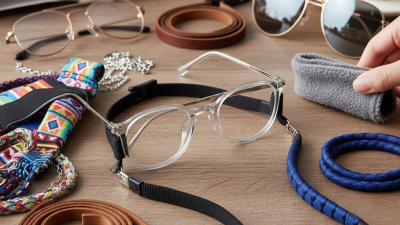
China has become a major sourcing destination for eyewear components and retail-ready products. Its manufacturers supply practical, customizable, and increasingly sophisticated Glasses Accessories for buyers worldwide. These products include cases, cleaning cloths, cords, chains, nose pads, temple tips, repair kits, display stands, lens cleaners, and packaging solutions.
Francesco Milleri, CEO of EssilorLuxottica, once described eyewear as “a very emotional product.” That insight also applies to accessories. A soft microfiber cloth protects lenses, while a strong case protects a customer’s daily investment. A lightweight glasses chain can improve convenience without looking excessive. Small details matter.
This guide examines China’s top ten types of Glasses Accessories for global buyers. It considers material quality, manufacturing consistency, customization, packaging, and purchasing value. Buyers can compare acetate, silicone, metal, microfiber, leather, and recycled materials more clearly. They can also assess logo placement, color matching, minimum order quantities, and sample quality.
The practical experience is not always perfect. A beautiful sample may hide weak hinges, poor stitching, or inconsistent printing. A low price may also create replacement costs later. That deserves attention.
Reliable sourcing requires more than browsing product photos. Buyers should request samples, confirm specifications, review factory capabilities, and verify applicable regional safety and labeling requirements. Clear communication reduces mistakes. Written inspection standards help even more.
The ranking is therefore not absolute. Market position, customer age, climate, and retail channel can change the best choice. Still, these ten categories provide a useful starting point for distributors, optical retailers, online sellers, and private-label brands seeking dependable Chinese suppliers.

Glasses accessories are the small products that protect, maintain, adjust, or display eyewear.
Common types include hard cases, soft pouches, cleaning cloths, cleaning sprays, straps, chains, nose pads, temple tips, screw kits, and display stands. They may look simple, but each item affects daily comfort and product presentation.
Global buyers source these accessories from China because production networks can support many materials and specifications. A buyer can compare metal, silicone, microfiber, acetate, and recycled options within one sourcing region.
Chinese manufacturers also provide practical customization, such as printed cases, shaped nose pads, private packaging, and mixed-color orders. This flexibility helps retailers match different markets without developing every component alone.
Cost is another reason, but the lowest quotation is not always the best decision.
In real purchasing work, weak coating, loose hinges, or inaccurate dimensions can create returns. Buyers should request samples, inspect material consistency, confirm packaging details, and review production records.
Test cleaning products for surface safety, especially when they touch lenses or skin. Ask suppliers about applicable market requirements, labeling, and restricted substances before placing an order.
Some buyers overlook small accessories until complaints appear. That mistake is expensive.
Local communication and factory visits can improve control, although travel does not guarantee quality. A clear specification sheet still matters more than a promising conversation.
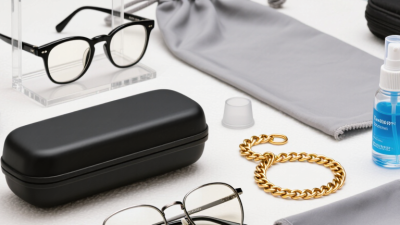
The Top 10 Glasses Accessories Manufactured for International Markets include cases, microfiber cleaning cloths, spray cleaners, replacement nose pads, temple tips, neck cords, adjustable straps, repair kits, protective pouches, and display stands. These products support prescription glasses, sunglasses, and safety eyewear across different retail channels. The World Health Organization reports that at least 2.2 billion people live with near or distance vision impairment, creating steady demand for practical eyewear support products. The figure reflects vision needs, not accessory sales, but it shows the market’s broad user base.
International buyers usually examine material safety, packaging efficiency, and regional compatibility. Common manufacturing choices include recycled polyester cloth, silicone nose pads, stainless-steel screws, acetate cases, and low-odor cleaning solutions. Small details matter. A repair kit should contain several screw sizes, while a case needs a hinge that survives repeated opening. Grand View Research has reported continued growth in the global eyewear market, with online sales and product replacement supporting accessory demand. However, market estimates differ because some reports include optical equipment and others exclude low-cost accessories. Buyers should check the research method before setting volume targets.
Export packaging also needs clear instructions, barcode space, moisture protection, and multilingual labels. Color consistency can fail between production batches. That problem is easy to overlook. Sampling should test cloth softness, hinge cycles, chemical stability, and cord tensile strength before mass production. Factories with documented inspections and traceable materials offer stronger reliability, although certification alone cannot replace real product testing.
This chart presents an indicative 2024 global buyer-interest index for commonly manufactured glasses accessories supplied from China. Higher values indicate stronger recurring demand across optical retail, eyewear packaging, repair, and promotional purchasing channels. Actual demand varies by market, material, order volume, and product specification.
Global buyers often compare ten common glasses accessories: nose pads, temple tips, hinges, screws, end pieces, chains, cords, cases, cleaning cloths, and repair kits. Materials reveal more than appearance. Silicone nose pads should feel soft and resist yellowing. Stainless steel hinges need smooth movement and even plating. Titanium is lighter, but its higher cost may not suit every market. Nylon cords offer flexibility, while tightly woven microfiber cloths reduce surface marks during cleaning.
Design must match daily use. A slim case saves space, but it may protect poorly against pressure. A wide temple tip can improve comfort, yet it may not fit narrow frames. Check hole sizes, screw threads, hinge angles, and attachment methods before placing a large order. Product drawings are useful, but physical samples reveal gaps and sharp edges. Small details matter. Packaging should keep parts dry and separated.
Quality control needs measurable checks. Test hinges through repeated opening cycles, inspect metal surfaces under strong light, and compare pad hardness across batches. Ask suppliers for material specifications, inspection records, and replacement policies. I once trusted a polished finish that looked excellent in photos; it scratched after limited handling. That mistake changed my sampling process. Still, no test predicts every customer complaint. Buyers should review comfort, compatibility, color consistency, and packing strength together, rather than choosing the lowest unit price.
China Top 10 Types of Glasses Accessories for Global Buyers?
China supplies cases, pouches, cleaning cloths, straps, chains, nose pads, temple tips, hinges, screws, and repair kits. Grand View Research estimates the global eyewear market reached USD 157.5 billion in 2023. That scale makes supplier selection more important than a low quotation.
Request a complete factory profile. Check the business license, production address, export experience, and quality system records. ISO 9001:2015 certification can support process control, but it cannot replace product testing. Ask for samples from mass production, not showroom samples. Measure hinge alignment, screw fit, coating adhesion, and cloth colorfastness. Small defects become expensive after thousands of units.
Material documents should match the destination market. For silicone nose pads, request composition and safety test reports. For metal chains, verify plating durability and restricted-substance compliance. Confirm carton strength with a drop test. Define acceptable defect limits in writing. Confirm MOQ, lead time, packaging, inspection rights, and corrective-action timing. Grand View Research forecasts continued eyewear market growth through 2030, yet demand forecasts do not guarantee stable quality. A clean audit can still miss weak subcontracting control. That risk deserves attention. Source references: Grand View Research, Eyewear Market Size Report, 2024; ISO 9001:2015.
| No. | Accessory Type | Common Materials | Typical Specifications or Features | Main Uses | What Global Buyers Should Check | Relevant Compliance Considerations |
|---|---|---|---|---|---|---|
| 1 | Replacement Eyewear Frames | Acetate, stainless steel, TR90-type thermoplastic, aluminum, titanium, recycled plastics | Lens width, bridge width, temple length, frame shape, finish, hinge position, prescription compatibility | Optical spectacles, sunglasses, safety eyewear and replacement programs | Confirm dimensional tolerances, frame alignment, surface quality, material declarations, color consistency and sample approval procedures. | Chemical restrictions may apply to materials, coatings, dyes and plasticizers under the destination market’s regulations. |
| 2 | Replacement Temples and Temple Tips | Acetate, injected plastic, silicone, rubber, stainless steel and flexible polymers | Length, curvature, tip diameter, mounting hole position, texture and logo-free customization | Frame repair, private-label eyewear assembly and after-sales replacement parts | Check compatibility with the frame, bending recovery, color matching, edge smoothness and attachment strength. | Verify skin-contact material safety and test for odor, migration and durability where required. |
| 3 | Nose Pads | Silicone, PVC-free soft polymers, acetate, ceramic and metal-backed materials | Screw-on, push-on or clip-on construction; various shapes, thicknesses and contact surfaces | Comfort adjustment, bridge support and replacement of worn optical components | Evaluate softness, compression recovery, discoloration resistance, attachment security and compatibility with nose-pad arms. | Skin-contact products should be assessed for irritation risks and restricted substances in the target market. |
| 4 | Nose-Pad Arms and Mounting Plates | Stainless steel, nickel silver, titanium and plated metal alloys | Arm length, mounting-hole spacing, bend profile, screw size and plating finish | Connecting nose pads to metal or combination frames | Check metal composition, dimensional accuracy, soldering or welding quality, corrosion resistance and nickel release testing where relevant. | Consider nickel-release requirements for products intended for prolonged skin contact. |
| 5 | Eyewear Hinges | Stainless steel, copper alloys, nickel silver, titanium and reinforced polymers | Barrel hinges, spring hinges and other compact hinge constructions with defined screw or rivet dimensions | Joining temples to front frames and enabling repeated opening and closing | Test opening-and-closing cycles, hinge play, spring return, alignment, burrs, corrosion and compatibility with assembly equipment. | Material and plating documentation should match the requirements of the importing country. |
| 6 | Eyewear Screws, Rivets and Washers | Stainless steel, brass, titanium and coated metal alloys | Small-diameter fasteners in different thread profiles, head shapes, lengths and finishes | Hinges, nose pads, frame joints and repair kits | Confirm thread accuracy, head integrity, torque performance, corrosion resistance, packaging count and compatibility with standard tools. | Request declarations for plating chemicals and restricted substances when required by the destination market. |
| 7 | Lens Holders, Rim Locks and End Pieces | Stainless steel, titanium, acetate and engineered polymers | Groove dimensions, rim thickness compatibility, mounting holes, finish and attachment method | Securing lenses and connecting rims, temples or nose bridges in frame assembly | Inspect fit accuracy, clamping force, solder or weld quality, edge safety and resistance to repeated assembly. | Check whether the completed eyewear requires conformity testing under the applicable optical or safety standard. |
| 8 | Eyewear Cases and Pouches | EVA, recycled polyester, cotton, microfiber, polyurethane and metal or plastic shells | Hard, semi-hard or soft construction; interior dimensions, closure type, padding and print method | Protecting glasses during storage, shipping and retail presentation | Check impact protection, odor, stitching, zipper or snap durability, interior cleanliness, colorfastness and packaging efficiency. | Textile, chemical, recycled-content and packaging labeling rules may apply in the destination market. |
| 9 | Cleaning Cloths and Lens-Care Kits | Polyester-polyamide microfiber, nonwoven fabric, paperboard and plastic or aluminum containers | Fabric weight, edge finish, lint performance, absorbency, cloth dimensions and liquid formulation | Removing dust, fingerprints and light smudges from lenses and frames | Test lint release, scratch risk, absorbency, print durability, liquid leakage and compatibility with coated lenses. | Cleaning liquids may be subject to chemical labeling, safety data and transport requirements. |
| 10 | Eyewear Cords, Chains and Retainers | Nylon, polyester, silicone, rubber, stainless steel, cotton and plated metal components | Cord length, bead or chain design, end-loop size, connector strength and adjustability | Holding glasses around the neck, sports use, occupational use and fashion accessories | Check pull strength, connector security, abrasion resistance, colorfastness, skin comfort and compatibility with different temple sizes. | Assess small parts, metal-contact safety, chemical restrictions and any special rules for children’s products. |
Global buyers should verify safety before comparing prices. For frames, nose pads, temples, chains, cases, and cleaning tools, request material declarations and accredited laboratory reports. ISO 12870 covers spectacle frames, while ISO 12312-1 applies to sunglasses. These standards help assess durability, nickel release, and optical performance. The World Health Organization reports that at least 2.2 billion people have vision impairment, making reliable eyewear components a serious responsibility. A certificate alone is not enough. Check its test scope, date, factory, and sample match.
Customization needs measurable documents. Confirm drawings, dimensions, tolerances, colors, logos, packaging artwork, and approved samples. Ask whether recycled materials or coatings change performance. Small differences can affect fit. I have seen attractive samples fail after mass production, usually because tolerance limits were vague. Packaging should include inner protection, moisture control, carton labels, and drop testing. ISTA testing methods can support transport preparation, while ISO 780 offers guidance for handling marks. The packaging may look perfect, but damage can still occur inside.
Tips: Write the shipping terms clearly. ICC Incoterms 2020 defines responsibilities for freight, insurance, customs, and risk transfer. Confirm the exact term, named place, carton dimensions, gross weight, documents, and delivery schedule. UNCTAD’s Review of Maritime Transport notes that over 80% of global merchandise trade by volume moves by sea. Delays are normal. Build buffer time, inspect pre-shipment samples, and keep photographic records. A checklist reduces mistakes, but it cannot replace careful human review.