2026 Best Drip Glasses Buying Guide for Global Buyers?
Choosing Drip Glasses in 2026 requires more than following a viral frame shape. Global buyers must compare lens protection, materials, fit, pricing, and supplier reliability. Grand View Research valued the global eyewear market at approximately USD 115.9 billion in 2023. It projects continued growth through 2030, supported by fashion demand, online retail, and rising vision-care awareness. These figures show opportunity, but they do not guarantee product quality.
Look beyond appearance.
A dependable buying decision begins with measurable details. Check lens category, ultraviolet protection claims, frame composition, hinge construction, and available face measurements. For sunglasses, buyers should request testing evidence aligned with relevant standards, such as ISO 12312-1, where applicable. The World Health Organization reports that at least 2.2 billion people experience near or distance vision impairment globally. That statistic reinforces the importance of separating fashion eyewear from corrective products. Drip Glasses may look bold, but visual comfort and responsible labeling matter more than a dramatic product photo.
Retailers should also study regional demand, import requirements, packaging rules, and return expectations. A low unit price can become expensive after freight, defects, customs charges, and customer complaints. Euromonitor International’s eyewear research highlights how premiumization and digital commerce continue reshaping consumer purchasing behavior. Still, market reports cannot predict every buyer’s preference. A frame that feels stylish in Seoul may feel oversized in London. This guide therefore combines industry evidence with practical inspection points, supplier questions, and honest limitations. Some recommendations may need revision as materials, standards, and consumer habits change.
What Are Drip Glasses and How Do They Work?
2026 Best Drip Glasses Buying Guide for Global Buyers
What Are Drip Glasses and How Do They Work?
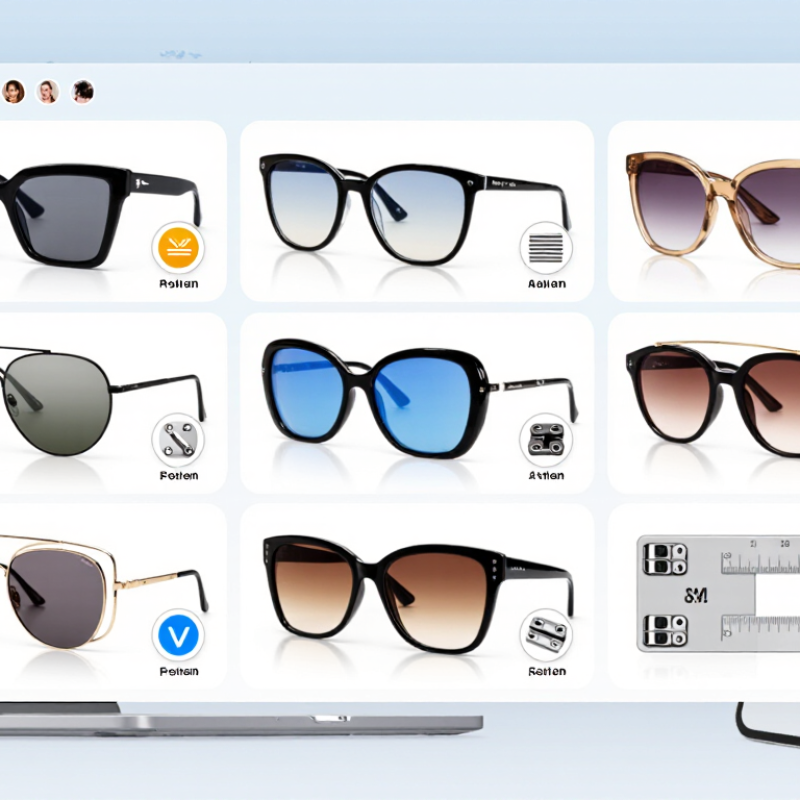
Drip glasses are fashion frames designed with melting, fluid-like edges around the rims. They usually use molded acetate, thermoplastic, or layered resin details. The “drip” effect is decorative, not liquid. The frame still performs standard eyewear functions. It holds the lenses, supports the bridge, and keeps the temples aligned.
Their lenses work by filtering and directing light before it reaches the eyes. Clear lenses may provide no UV protection. Buyers should check for UV400 or 99–100% UVA and UVB protection, as advised by the U.S. Food and Drug Administration. Polarized lenses can reduce reflected glare from roads and water. They do not automatically improve prescription accuracy. Fit remains critical. An optician should check lens alignment, bridge pressure, and pupil position.
The World Health Organization reports that at least 2.2 billion people experience near or distance vision impairment. This makes proper lens measurement more important than visual styling alone.
Grand View Research projects continued growth in the global eyewear market through 2030, driven partly by fashion-led designs. That shape matters. Heavy drip details can catch on hair or feel unbalanced after several hours. I would not trust a dark tint alone. Product pages sometimes make protection claims unclear, and buyers should verify test standards before ordering.
Which Drip Glass Features Matter for Different Uses?
For global buyers, the best drip glass depends on its daily task, not its appearance. Pour-over coffee needs a narrow base, stable grip, and clear volume markings. These details support repeatable brewing. The International Coffee Organization reported global coffee consumption at about 177 million 60-kilogram bags in 2023/24. Small design errors can affect many daily servings.
For iced drinks, prioritize thicker walls, a wide opening, and enough space for cubes. For tasting, thinner rims can improve contact with the lips, though they may feel fragile. Heat-resistant borosilicate glass suits hot beverages, but buyers should still check thermal-shock testing. ISO 7459 provides relevant performance guidance for glass containers. Dishwasher resistance also matters in cafés. It saves labor, but repeated cycles can dull printed markings. That detail is easy to overlook.
Tips:
Ask suppliers for wall thickness, usable capacity, temperature limits, and test records. Request a sample before ordering. FEVE industry data shows European glass packaging collection near 80%, supporting glass’s recycling advantage. However, recycling access differs by country. Clear glass may also reveal sediment, foam, and leftover syrup, which helps quality checks. I would avoid choosing only by weight. A heavier glass can feel premium, yet it may increase shipping costs and hand fatigue.
What Quality, Safety, and Certification Standards Should Buyers Check?
For global buyers, quality starts with the glass itself, not attractive product photos. Check wall thickness, rim smoothness, clarity, bubbles, scratches, and base stability. For food-contact drip glasses, request lead and cadmium migration tests under ISO 7086-1 and ISO 7086-2. Thermal-shock resistance should also be tested against ISO 7459 when hot and cold liquids may be used. These details matter because sudden temperature changes can turn a small surface flaw into breakage.
Certification needs careful reading. The ISO Survey 2023 recorded 1,265,216 ISO 9001 certificates worldwide, but ISO 9001 confirms a management system, not automatic product safety. Ask for batch-specific reports from an ISO/IEC 17025-accredited laboratory. Check the test date, sample description, methods, limits, and laboratory accreditation scope. A certificate can look reassuring.
The European Commission’s Safety Gate 2024 report listed 4,137 product alerts, with chemical risks representing 49%. That figure supports closer checks on colored coatings, printed patterns, and decorative surfaces. Request declarations for food-contact compliance, traceability records, and evidence that coatings remain stable after washing. For export packaging, inspect drop-test results, carton strength, separators, and moisture protection. Confirm whether any claimed mark applies to the product or only to the factory. I would also order pre-shipment samples, because documents sometimes describe an older production batch. That is an uncomfortable gap, but it is common enough to investigate.
2026 Best Drip Glasses Buying Guide for Global Buyers
Reference Lead and Cadmium Release Limits for Glass Foodware
The chart shows reference maximum release limits for lead (Pb) and cadmium (Cd) under ISO 6486-2:2015. For drinking glasses, buyers should request accredited laboratory migration-test reports, verify the correct product category, and confirm compliance with the regulations of the destination market. Lower release values indicate stricter limits.
Reference: ISO 6486-2:2015, glass, glass-ceramic and ceramic foodware—limits for lead and cadmium release. Local laws and purchasing specifications may impose different or additional requirements.
How Can Global Buyers Compare Suppliers, Prices, and Shipping Options?
When comparing drip glasses in 2026, global buyers should examine more than the unit price.
Request material specifications, glass thickness, dropper accuracy, closure compatibility, and inspection records. A supplier’s ISO 9001 certificate can support confidence, but it does not replace batch testing. Ask for evidence.
The cheapest quote misleads.
Compare the landed cost, including tooling, inner packaging, export documents, insurance, duties, and destination delivery. Request prices at several quantities, such as 1,000, 10,000, and 50,000 pieces. This reveals where scale reduces costs. The World Bank’s Logistics Performance Index 2023 evaluates customs, infrastructure, shipment arrangements, and timeliness. These factors can explain why a slightly higher factory price produces a lower final cost. I would still check the calculation manually. Spreadsheets sometimes hide currency fees.
Shipping deserves a separate comparison.
UNCTAD’s Review of Maritime Transport 2024 states that maritime transport carries over 80% of global merchandise trade by volume. Sea freight usually suits large, non-urgent orders, while air freight supports samples and small replenishment shipments.
Ask each supplier for transit estimates, loading ports, carton dimensions, pallet counts, and Incoterms 2020. Compare door-to-door quotations, not only freight charges. Request recent shipment references and inspect sample packaging before production.
A practical test includes vibration, leakage, and cap-fit checks after transport. Delivery promises are not proof. Weather, port congestion, and customs inspections can still change the schedule.