Leave Your Message

Top Sloth Glasses Holder Suppliers for Global Buyers

For global buyers, choosing a Sloth Glasses Holder supplier involves more than finding a charming design. The product may sit on a desk, bedside table, or retail shelf, so its shape and stability matter. A sloth’s face should hold glasses securely without scratching the frames. Small details count. Check product dimensions, weight, finish, and the materials used for both the holder and its base. Clear specifications make comparisons easier and reduce avoidable surprises.

This guide introduces suppliers and practical factors buyers can assess before requesting a quote. Look for current product photos, consistent descriptions, responsive communication, and sample options. Ask about minimum order quantities, customization, packaging, production schedules, and inspection procedures. For larger orders, confirm how defects are handled and whether packaging can protect delicate painted features during transit. A polished catalog is not proof of dependable production. Samples help, though even a sample cannot guarantee every item will match. That gap deserves attention. Buyers should also compare total landed costs, not just the unit price, and allow time for production and shipping estimates to change. Supplier claims should be checked against written specifications and order terms. The right partner is not always the cheapest or the most visible; it is one whose capabilities fit the buyer’s product, quantity, and quality expectations. Some uncertainty remains, so careful questions are part of the process.
Top Sloth Glasses Holder Suppliers for Global Buyers

Sloth Glasses Holders: Product Types, Materials, and Everyday Uses

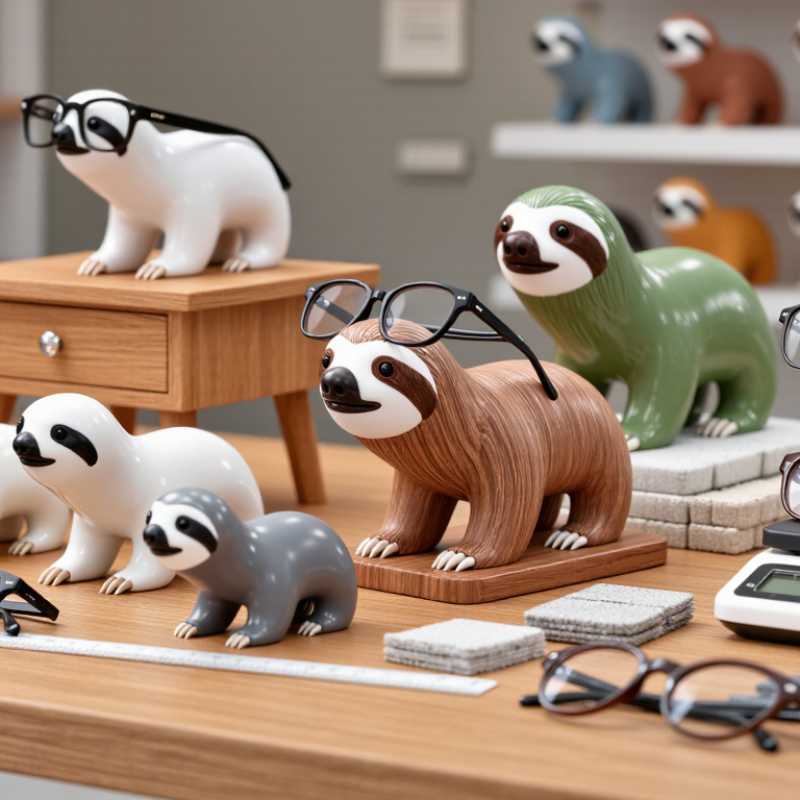
Sloth glasses holders combine a small animal figure with a stable place to rest reading glasses. Common designs include flat desk stands, freestanding figurines, and compact bedside holders. Their curved paws or raised faces support the frame while keeping lenses off dusty surfaces. Some styles suit sunglasses, but wide arms may not fit every opening. Check the product dimensions against the glasses you use most.

Materials affect both appearance and daily handling. Resin and ceramic can show fine details, though they may chip if dropped. Wood feels warm and light, while fabric-covered versions are softer but can collect dust. For buyers comparing suppliers, request clear measurements, close-up finish photos, and a sample when practical. Inspect the base for wobble and the contact points for rough edges. The cute shape is not always the most practical choice; I would test fit before placing a large order.

Tips: Place the holder on a level surface, away from table edges. Clean it with a soft, dry cloth, and avoid pressing delicate frames into tight openings. For gifting or retail display, confirm packaging protects protruding ears and paws during shipping. Some designs need more space than expected.

Market Context: WHO Estimates 2.2 Billion People Have Vision Impairment

WHO estimates that at least 2.2 billion people live with near or distance vision impairment. In at least 1 billion cases, the condition could have been prevented or remains unaddressed. These figures describe a substantial public health need, not a shortcut for estimating product demand. Many people use corrective eyewear for reading, work, travel, and everyday tasks.

For global buyers evaluating sloth glasses holders, this context highlights why keeping eyewear close can matter. A holder can help organize a desk or bedside table, but it is an accessory, not vision care. Small details count. Check that the base feels steady, the support suits different frame shapes, and the edges are smooth. Ask suppliers for material specifications, product measurements, packaging details, and samples before larger orders. Fit can vary.

A friendly sloth shape may make a holder easy to spot, but appearance alone is not enough. Confirm color consistency and protective packaging for transit. Set clear inspection criteria with suppliers. This part is sometimes overlooked. A glasses holder will not improve eyesight, and the WHO estimate should not be used to suggest otherwise. Still, a carefully made accessory can support the simple habit of keeping glasses within reach.

Demand Context: WHO Says 1 Billion Cases Are Preventable or Unaddressed

Top Sloth Glasses Holder Suppliers for Global Buyers

Demand Context: WHO Says 1 Billion Cases Are Preventable or Unaddressed

WHO estimates that at least 1 billion people have vision impairment that could have been prevented or remains unaddressed. This figure points to a real need for accessible eye care, not just a market opportunity. A sloth-shaped glasses holder cannot improve vision, but it can help keep eyewear visible and within reach. On a bedside table, a soft, stable holder may prevent glasses from slipping beneath a book or pillow. Small conveniences matter. Still, they should never be presented as a substitute for eye examinations or suitable vision correction.

For global buyers, supplier checks should focus on practical quality: a weighted base, smooth edges, secure construction, and materials that are easy to clean. Ask for product specifications and sample units before placing a large order. Check whether the holder fits different frame sizes without pressing on lenses. Packaging also deserves attention; a charming design can arrive damaged if the box offers little protection. There is room for reflection here: novelty products can encourage better storage habits, but their health impact is limited. Responsible product descriptions should make that distinction clear.

Tips: Test samples on a flat surface. Inspect seams, finish, and stability. Request clear material details, and avoid claims that the product treats or prevents vision problems.

Global Vision Impairment: Preventable or Unaddressed Burden

WHO estimates that at least 2.2 billion people have near or distance vision impairment, including at least 1 billion whose impairment could have been prevented or has yet to be addressed.

The 1 billion figure is included within the 2.2 billion total; the bars are not separate populations. Source: World Health Organization.

How Global Buyers Assess Sloth Glasses Holder Suppliers

Global buyers should assess sloth glasses holder suppliers against clear product and service criteria. Check the holder’s dimensions, base stability, and the shape of its arms. These details affect whether different glasses sit securely or slide off. Ask what materials are used and how the surface is finished. A sample can reveal rough edges, paint inconsistencies, or a loose fit that product photos hide. Small flaws matter.

Compare samples with the supplier’s written specifications, then ask whether production units will follow the same materials and measurements. Request clear lead-time estimates, packaging details, and updates on order progress. For international shipments, confirm carton dimensions and protective packing; a cute holder can still arrive scratched or bent. Check how the supplier handles defects and replacement requests. A fast reply is useful, but vague answers deserve follow-up. No checklist removes every risk, and sample-to-batch consistency can be difficult to judge before a first order.

Tips: Photograph the sample beside a ruler and a pair of glasses. Keep agreed measurements and finish details in writing, and review them against a production sample when available.

Comparing Samples, Customization, Quality Checks, and Shipping Terms

For global buyers, a sloth-shaped glasses holder should be judged by more than its charming sample. Request a finished unit in the intended material and color, rather than relying on catalog images. Check that the arms sit securely, the base stays upright, and contact points feel smooth. Small details matter. A single sample, however, cannot show whether every production batch will match.

Discuss customization in measurable terms. Share a drawing with dimensions, color references, logo placement, and acceptable variations. Ask which changes affect tooling, price, or lead time. Keep one approved sample as a reference. It is easy to assume that a friendly supplier understands vague requests; that assumption can become an expensive mistake. Still, too many specifications may slow a simple order, so prioritize details that affect fit and appearance.

Before production, agree on inspection criteria, including color consistency, stability, surface marks, and packaging condition. Ask for dated photos or a pre-shipment inspection report, and clarify how defects are handled. Quality checks should match the order size and risk; a quick visual review may miss loose joints. Shipping terms deserve equal care. Confirm carton quantities, packing protection, dispatch timing, tracking, and who pays freight and import-related charges. Request the exact delivery term in writing, since similar-sounding quotes may cover different services.