Leave Your Message

2026 Top Zipper Glasses Case Suppliers for Global Buyers

Sourcing a reliable Zipper Glasses Case supplier requires more than comparing product photos and quoted prices. Global buyers must examine material quality, zipper performance, production consistency, and communication standards. A case may look polished online but fail after repeated opening, exposure to humidity, or shipment pressure. This guide introduces leading suppliers for 2026 and explains how buyers can assess them with practical procurement evidence.

Our evaluation focuses on factory experience, customization capability, quality-control procedures, export support, and transparent commercial terms. We consider details such as EVA or PU shells, soft microfiber lining, reinforced seams, zipper pull strength, logo placement, and internal dimensions. These small features affect protection, usability, and customer satisfaction. Sample testing remains essential. Open each zipper repeatedly, place standard eyeglasses inside, and inspect the case after compression. Simple checks reveal problems.

Not every supplier will fit every market. A low MOQ may suit a new brand, while a large retailer may need automated production and stable monthly capacity. Buyers should request material specifications, inspection records, packaging details, lead times, and clear replacement policies. Independent factory verification can also reduce uncertainty, although it cannot remove every risk. Mistakes still happen, even with experienced suppliers. That is worth remembering.

The following overview supports informed supplier comparisons across regions. It is designed for importers, optical retailers, promotional-product companies, and private-label brands seeking dependable partnerships in 2026. Supplier rankings can change as capacity, pricing, and service quality change. Careful verification remains the buyer’s responsibility.

2026 Top Zipper Glasses Case Suppliers for Global Buyers

Zipper Glasses Cases: Definition, Uses, and Key Features

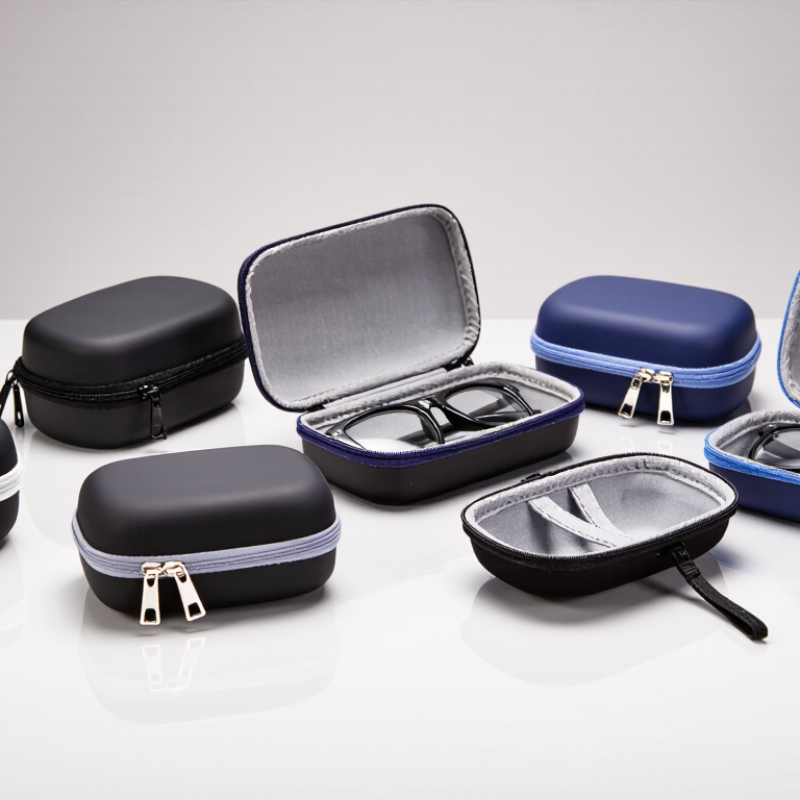
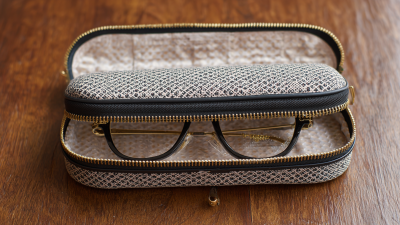
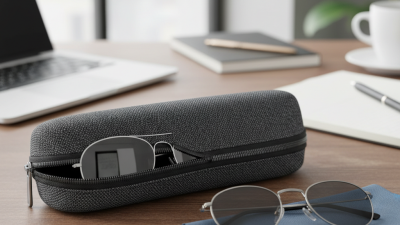
A zipper glasses case is a protective container with a stitched closure, usually made from molded EVA, leather, fabric, or recycled polymer. It shields lenses from dust, pressure, scratches, and accidental contact inside a handbag or vehicle. The zipper matters because it keeps the case closed during movement, though poor teeth alignment can cause early failure.

Global demand is supported by eyewear consumption. Grand View Research valued the global eyewear market at approximately USD 115.9 billion in 2023 and forecast continued growth through 2030. This figure measures eyewear, not cases, but it signals a broad replacement and storage need.

Suppliers serving global buyers should offer several sizes, firm hinges, smooth zipper tracks, and interiors that do not shed fibers. Small details matter.

Practical evaluation should include drop testing, compression checks, odor inspection, and repeated zipper cycling. A 20,000-cycle target can provide useful evidence, but buyers should confirm the test method and sample size.

Intertek and similar testing guidance emphasizes traceability, material verification, and documented quality control for consumer products. I have found that a case can look premium yet fail at the seam. Appearance is not proof.

Recycled materials may reduce environmental impact, but their durability still needs independent testing. Suppliers should disclose dimensions, tolerances, material composition, packaging data, and inspection records before large orders.

How to Evaluate Global Zipper Glasses Case Suppliers

2026 Top Zipper Glasses Case Suppliers for Global Buyers

Global buyers should evaluate zipper glasses case suppliers beyond price and polished catalogs. Grand View Research estimates the global eyewear market reached USD 115.90 billion in 2023, with an 8.5% projected CAGR through 2030. That growth increases demand for protective accessories, but supplier quality remains uneven. I begin with factory experience, production capacity, and documented export history. Ask for recent inspection records, not only product photos.

A dependable supplier should provide material specifications, zipper-cycle results, seam-strength data, and packaging details. Request samples in several colors and sizes. Test them with real frames, repeated opening, drops, and humid storage. The case should protect lenses without excessive pressure. ASTM D5276 drop testing offers a useful reference, while ISO 9001 certification can indicate controlled processes. Certification alone proves little.

Material transparency also matters. Suppliers should identify fabric composition, foam density, coatings, and recycled content. The Global E-waste Monitor reported 62 million tonnes of electronic waste in 2022, reminding buyers that product durability and responsible sourcing deserve attention. A small case that fails quickly creates avoidable waste.

My checklist is imperfect. I once overlooked zipper noise and weak interior stitching during sample approval. That mistake changed my inspection process.

Compare defect rates, lead times, minimum order quantities, and corrective-action speed before choosing a long-term partner. Suppliers who answer uncomfortable questions clearly are usually safer to scale with.

Top Supplier Categories and Regional Manufacturing Strengths

Global zipper glasses case sourcing is shaped by supplier type and manufacturing location. The right category depends on volume, customization, and inspection needs. OEM factories suit large orders with fixed designs. Private-label specialists offer faster sampling and more flexible materials. Small-batch workshops can produce leather, recycled fabric, or molded cases with stronger visual detail. Trading companies may combine several factories, but buyers should verify production records and inspection controls.

Regional strengths differ. China remains strong in integrated supply chains, zipper sourcing, printing, and high-volume assembly. Vietnam and Cambodia offer growing cut-and-sew capacity, especially for textile cases. India provides useful leatherworking and craft-based production, though consistency needs close monitoring. Turkey and Eastern Europe support shorter delivery routes into European markets. Mexico can serve North American buyers with regional production advantages. These observations align with UN Comtrade 2024 trade data under HS 4202, although that code includes many cases beyond eyewear.

Market demand also supports careful investment. Grand View Research reported continued growth in the global eyewear market in its 2024 industry analysis, with Asia-Pacific among the fastest-growing regions. However, eyewear-case data is rarely separated from broader case categories. That is an important limitation. Buyers should request zipper-cycle tests, seam-strength results, material declarations, and pre-shipment photographs. A low unit price can hide weak lining, bent sliders, or poor carton protection. Small details matter. Supplier comparisons should include landed cost, defect rates, sampling speed, and communication accuracy.

Materials, Customization Options, and Quality Standards

2026 Top Zipper Glasses Case Suppliers for Global Buyers

Materials, customization, and quality standards now shape every serious buying decision. In supplier audits, I inspect fabric density, zipper movement, lining softness, and edge binding by hand. Recycled polyester offers a practical option for lightweight cases. The 2024 Textile Exchange Materials Market Report states that recycled polyester represented about 14% of global polyester production in 2023. However, recycled content alone proves little. Buyers should request composition records and test reports.

Common materials include polyester, nylon, microfiber, cotton canvas, and synthetic leather. Each creates a different user experience. Microfiber protects lenses gently, while canvas gives a firmer, more casual feel. Custom options may include molded shapes, printed logos, puller colors, inner pockets, foam thickness, and retail packaging. A poor zipper can still ruin a beautiful sample. Suppliers should control dimensions, stitching density, color consistency, and odor before mass production. ISO 9001-based quality systems can improve traceability, though certification does not guarantee perfect workmanship.

Tips: Request three samples from different production batches. Test the zipper at least 500 cycles. Check seam strength, color transfer, and lining abrasion. ASTM D2061 offers useful guidance for zipper testing, while ISO 2859-1 supports acceptance sampling. These standards help, but they cannot replace physical inspection. My own review process sometimes misses small puller scratches. That weakness deserves honest correction, not a polished claim.

2026 Top Zipper Glasses Case Suppliers for Global Buyers - Materials, Customization Options, and Quality Standards

Supplier Profile Common Production Region Main Case Materials Typical Construction Customization Options Typical MOQ Range Indicative Lead Time Quality and Compliance Focus Best Fit for Global Buyers
Profile A: High-Volume OEM Manufacturer Eastern and Southern China Polyester fabric, PU, EVA, microfiber, metal or nylon zipper tape Hard-shell or semi-hard EVA shell with molded or stitched lining Custom dimensions, color matching, woven labels, screen printing, heat transfer, debossing, zipper pulls, retail packaging 1,000–5,000 pieces per color or design 30–60 days after sample approval Pre-production approval, zipper cycle testing, seam strength, colorfastness, odor inspection, AQL-based final inspection Retail chains, optical distributors, promotional programs, and large private-label orders
Profile B: Low-MOQ Custom Workshop South Asia and Southeast Asia Cotton canvas, recycled polyester, PU, synthetic leather, felt Soft pouch or lightweight gusseted case with padded interior Small-batch colors, embroidery, printed patterns, custom lining, hangtags, paper sleeves, barcode labels 100–500 pieces per design 25–50 days after artwork and sample approval Material composition verification, needle and thread control, dimensional tolerance, print adhesion, visual inspection Independent eyewear labels, online sellers, boutique retailers, and seasonal collections
Profile C: Premium Leather Goods Supplier Italy, Portugal, Turkey, and selected Asian leather-production centers Full-grain leather, split leather, vegetable-tanned leather, suede, cotton or polyester lining Structured leather case with reinforced panels and stitched zipper perimeter Leather finish, edge paint, foil stamping, blind embossing, custom hardware, lining color, gift box packaging 300–1,500 pieces per design 45–75 days after material and sample approval Leather traceability, restricted-substance testing, surface finish consistency, color migration, stitch quality, hardware corrosion resistance Premium optical brands, luxury accessories, corporate gifting, and high-end department stores
Profile D: Sustainable Materials Specialist China, Vietnam, India, and certified European production facilities Recycled polyester, recycled nylon, organic cotton, cork fabric, bio-based PU Soft or semi-rigid case using recycled padding and water-based coatings where available Recycled-content labeling, custom color, printed logos, recycled zipper tape, FSC-certified paper packaging, digital artwork 500–3,000 pieces per design 35–65 days after material confirmation Recycled-content documentation, REACH restricted substances, colorfastness, coating durability, packaging recyclability, supplier audit records Sustainability-focused brands, eco-conscious retailers, and ESG-oriented procurement programs
Profile E: Protective Travel-Case Supplier China, Taiwan, Vietnam, and specialized technical-textile hubs EVA, ABS, polycarbonate, neoprene, nylon, foam, and microfiber Molded hard case or impact-resistant semi-hard case with dedicated lens protection Custom mold, internal compartments, elastic straps, mesh pockets, molded logo, zipper pull, water-resistant coating 1,000–10,000 pieces per mold or model 45–90 days including tooling, sampling, and mass production Drop and compression testing, zipper durability, shell deformation, interior abrasion, dimensional accuracy, odor control Travel eyewear, sports glasses, prescription eyewear, and protective accessory programs
Profile F: Promotional and Corporate-Gift Supplier China, India, Bangladesh, and regional contract-manufacturing networks Polyester, nylon, cotton, PU, PVC-free synthetic materials, and nonwoven fabric Simple zip pouch, foldable case, or lightweight promotional sleeve One- or two-color printing, full-color transfer, logo label, custom insert card, polybag, carton labeling, mixed-color packing 500–5,000 pieces per artwork 20–45 days after artwork approval Print accuracy, color consistency, zipper operation, packaging count, carton drop checks, basic restricted-substance screening Trade shows, optical events, employee gifts, promotional campaigns, and short-term marketing programs

Notes: MOQ and lead-time figures are typical market ranges for comparable products and should be confirmed with each qualified manufacturer. Applicable requirements may include REACH Regulation (EC) No. 1907/2006, California Proposition 65 where relevant, CPSIA for children’s products sold in the United States, ISO 9001 quality-management practices, and buyer-specific AQL inspection plans. Certification, test reports, and recycled-content claims should be verified before purchase.

Ordering, Shipping, and Compliance Considerations for Buyers

2026 Top Zipper Glasses Case Suppliers for Global Buyers

Reliable ordering starts with a clear product specification. Buyers should confirm case dimensions, lining material, zipper type, logo method, and color tolerance. Request a pre-production sample before approving bulk manufacturing. A sample reveals weak stitching, chemical odor, or a zipper that catches near the corner. Ask about minimum order quantities, replacement policies, and production capacity during peak seasons. Do not rely only on catalog photos. They can hide uneven seams.

Shipping plans should match order urgency and carton volume. Air freight may suit small launches, while sea freight usually lowers costs for larger shipments. Confirm the trade term, delivery point, insurance responsibility, and estimated customs charges in writing. Measure carton size carefully because dimensional weight can exceed the actual weight. Moisture-resistant cartons help protect cases during humid routes. Still, poor internal packing can crush corners.

Compliance requires more than a basic invoice. Suppliers should provide accurate material descriptions, country-of-origin details, commercial invoices, packing lists, and relevant test reports. Requirements differ by destination, especially for coatings, plastics, adhesives, and children’s products. Check labeling, chemical restrictions, and recycling rules with a qualified local advisor. A supplier’s certificate is useful, but it is not a complete legal guarantee. I have seen orderly files contain outdated reports. Leave time for independent checks, and keep every approval tied to the exact production batch.